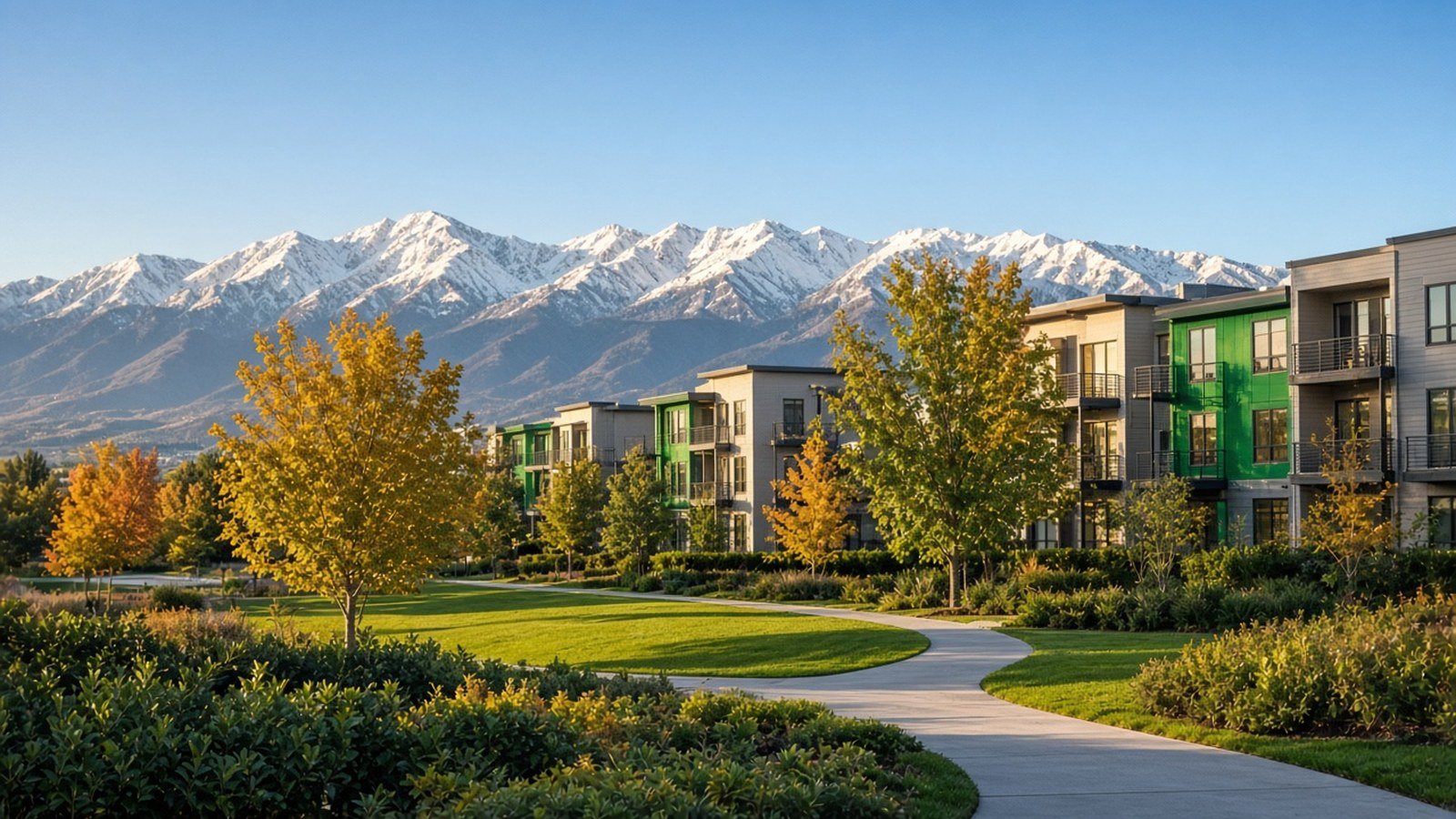
Good HOA management in Salt Lake City comes down to three things: a manager with the capacity to know your community, a clear path for getting issues resolved, and vendors and communication that fit how your property actually works. A downtown condo building, a townhome community near the mountains, and a master-planned neighborhood across the valley each need something different. This guide covers what Salt Lake County boards should expect from local management, the questions to ask, and how a switch works if your board decides to move.
This article is general information for Utah HOA and condo boards, not legal advice. Your governing documents and management contract control many details. Talk with your association's attorney about contract terms.
What Salt Lake City boards should expect from HOA management
Whatever your community type, a few basics should hold:
A named manager with a manageable load. You should know who manages your community and roughly how many other communities they handle.
A clear request process. When an owner or board member reports an issue, someone should acknowledge it, own it, and keep the board informed until it's closed.
Organized financials. Monthly reports the board can read, reconciled accounts, and a budget process that starts early enough for real discussion.
Meeting and records support. Agendas, minutes, and governing documents that are easy for the board and owners to find.
Local vendor coordination. Contractors who know Wasatch Front weather and can be scheduled before a problem becomes urgent.
Condo buildings in Salt Lake City
Condo associations in and around downtown Salt Lake City often share more than a roof. Elevators, fire safety systems, parking structures, common hallways, and building-wide plumbing all belong to the association, and a problem in one place can affect many owners at once.
For condo boards, ask candidates:
Who coordinates recurring inspections and service for shared building systems, and how does the board see what's scheduled?
How are owners notified about water shutoffs, elevator work, or other building-wide disruptions?
How do you handle requests that sit between an owner's unit and the common elements?
Mixed-use buildings and communities with older systems need a manager who can track these details over time, not just react when something breaks.
Townhome and single-family communities across the valley
Outside downtown, many Salt Lake County associations are townhome or single-family communities, from established neighborhoods near the mountains in Sandy to master-planned communities in South Jordan. Their work tends to center on grounds, shared amenities, architectural requests, and consistent, fair enforcement of the governing documents.
Questions that matter here:
How are landscaping, irrigation, and common-area maintenance scheduled and checked?
How are architectural requests submitted, tracked, and answered?
How do you handle violations so enforcement is consistent and documented?
Vendors and seasons on the Wasatch Front
Weather drives a lot of HOA work in Salt Lake County. Winter snow removal for private roads, parking lots, and walkways needs to be under contract and clearly scoped before the first storm. Spring brings irrigation startup and landscape cleanup, and fall brings irrigation winterization and roof and gutter checks.
A good manager plans this calendar with the board, gathers comparable bids, and confirms vendors carry the insurance your association requires. Ask who selects vendors, whether the company or a related business owns any service providers it would hire for you, and how the board approves contracts. Learn more about our approach to vendor management.
Keeping owners informed
Owners in a busy urban building and owners in a suburban townhome community both want the same thing: to know what's happening and where to go with a question. Ask how owners pay assessments, submit requests, and find documents online, and how the board will be kept in the loop on open issues. See how we handle the portal and communication side of management.
Financial basics every board should confirm
Utah law requires an HOA to keep all of its funds in an account in the association's name and not commingle them with the funds of any other person (>Utah Code 57-8a-230). Condominium associations have the same rule (>Utah Code 57-8-60). Ask each candidate how their accounts are set up to meet that requirement, who reconciles them, and what reports the board receives each month.
Long-term planning matters too, especially for buildings with aging systems and communities with private roads. Ask how the manager supports reserve planning and budget preparation. Read more about our financial management and reserve fund planning.
Switching management in Salt Lake County
If your board is considering a change, the process is the same across the valley: check your current contract's termination terms, choose the new company, give notice, and plan the handoff of records, accounts, and vendor contracts. Our 30-day transitions are designed to keep that handoff orderly for the board and residents.
For more detail, read our guides on how to choose an HOA management company in Utah and how to switch HOA management companies in Utah, or see our switching managers page.
How we work with Salt Lake County boards
We're Utah Management, the Premier HOA Management Company, and we curate communities instead of collecting doors. Our managers carry capacity-based loads, so your board gets attention instead of a spot on a crowded roster. Requests follow a clear 48-hour resolution path, so issues don't sit in a black hole. It's a process we follow, not a promise that every issue is fully resolved within 48 hours.
We support boards with meetings, records, and governance through our board support services. Learn more about our work in the area on our Salt Lake City HOA management page.
Frequently asked questions
What does an HOA management company do in Salt Lake City?
It handles the day-to-day work the board would otherwise carry: financial reporting and collections, vendor coordination, maintenance requests, meeting support, records, and owner communication. The exact scope depends on your contract and your community type.
Do condo buildings and townhome communities need different management?
Often, yes. Condo buildings share systems like elevators, fire safety, and plumbing, so coordination and owner notices matter more. Townhome and single-family communities tend to focus on grounds, amenities, architectural requests, and enforcement.
Do you manage communities outside Salt Lake City?
Yes. We work with boards across Salt Lake County, including Sandy and South Jordan, and in other communities along the Wasatch Front.
How long does it take to switch HOA management companies?
It depends on your current contract's termination terms and how quickly records and accounts can be handed over. Our 30-day transitions are designed to keep the change orderly once your board has decided to move.
Ready to talk about your community?
Tell us about your association, and we'll send a proposal with a clear scope your board can compare.
Prefer to talk first? Call (801) 605-3000.
Real People, Rapid Response.